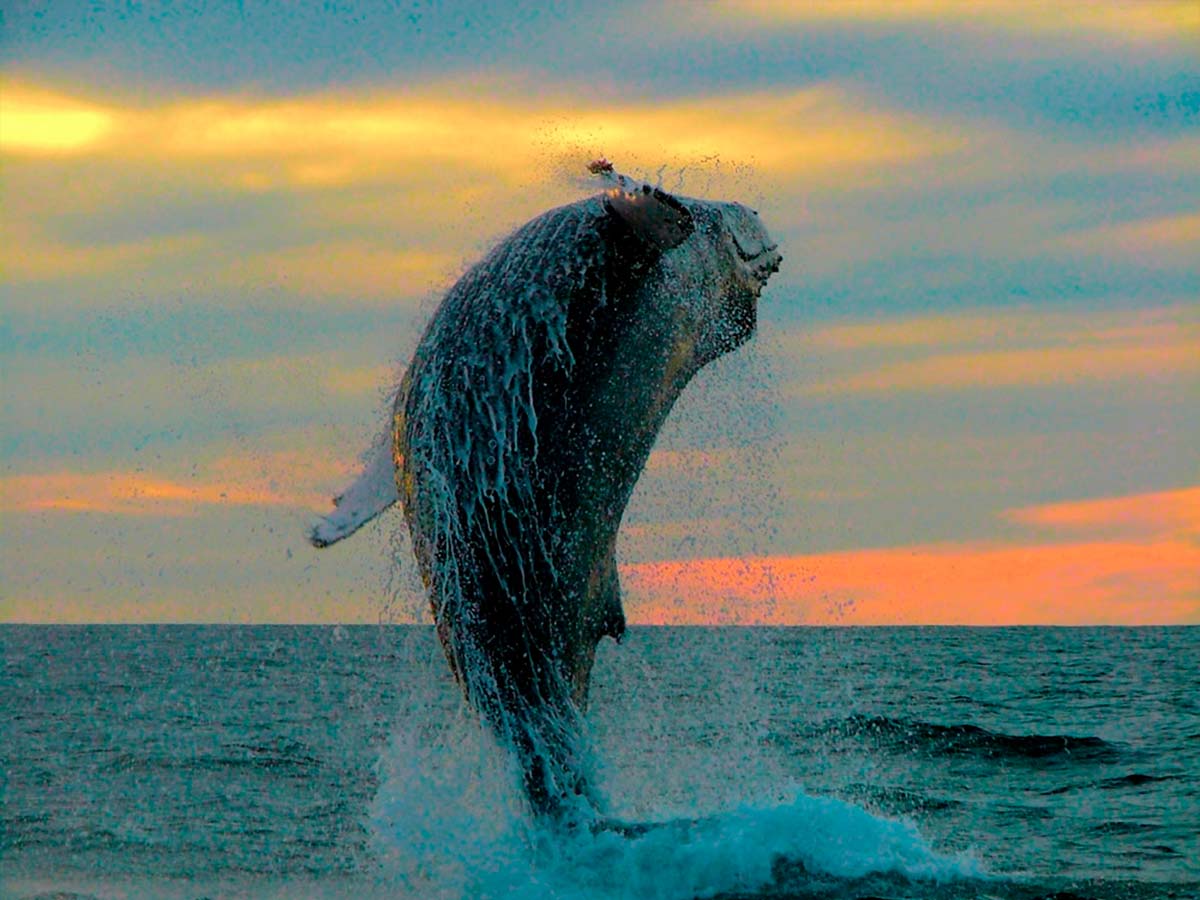
Every winter, one of the most spectacular shows in Mexico happens just off the beaches of Punta Mita. Thousands of humpback whales travel south from the cold waters of the North Pacific to the warm, protected waters of Banderas Bay to mate, give birth and raise their calves. Watching a 40-ton whale launch itself out of the ocean is a moment you never forget, and Punta Mita, at the northern tip of the bay, is one of the best places to see it.
Here is everything you need to know to plan your trip: when to go, how the tours work and how to make the most of your time on the water.
When Is Whale Watching Season in Punta Mita?
Humpback whales arrive in Banderas Bay in early December and stay until late March. The official whale watching season is set each year by Mexican authorities and usually runs from the first week of December to around the third week of March, with some operators continuing into early April if whales are still around.
If you can choose your dates, aim for mid-January through February. This is peak season: the highest number of whales are in the bay, newborn calves are swimming alongside their mothers, and males are competing for attention with breaches, tail slaps and their famous songs. December and March are still excellent, with good sighting chances and a little less competition for tour spots.
A bonus: winter is also the dry season on the Riviera Nayarit, with sunny days, calm seas and comfortable temperatures, so whale season lines up perfectly with the best beach weather of the year.
What You Will See
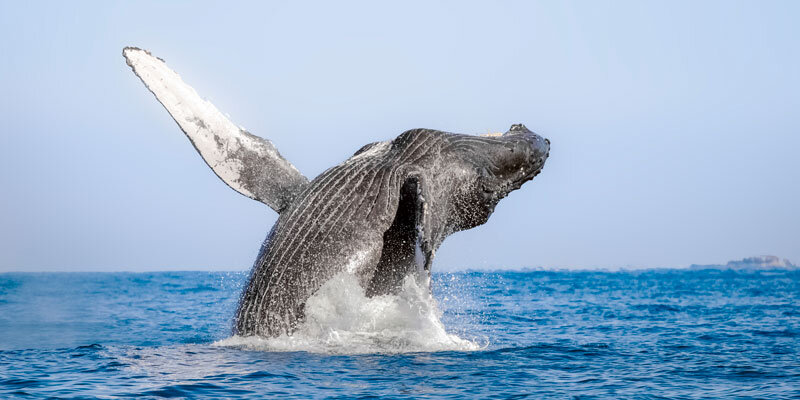
The stars of the show are the humpback whales. They come mostly from feeding grounds off Alaska, Canada and the west coast of the United States, traveling thousands of kilometers to reach Mexico. Look out for:
- Breaching, when a whale throws most of its body out of the water and crashes back down.
- Tail and fin slaps, a common way whales communicate with each other.
- Mothers and calves resting near the surface, often the most moving sight of the trip.
- Competitive groups, where several males chase a female at high speed.
You will very often see bottlenose dolphins too, and sometimes sea turtles, manta rays and seabirds near the Marietas Islands, a protected national park just off the coast of Punta Mita.
How Do Whale Watching Tours Work?
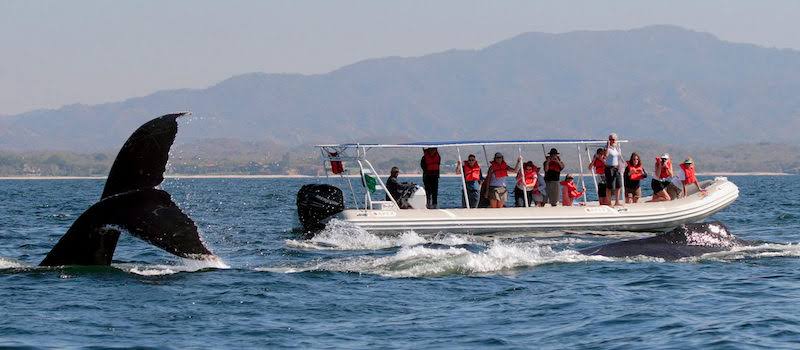
Most tours from Punta Mita leave from the small marina and beach area in town, so the whales are only minutes away from your villa. Here is what a typical outing looks like:
- Duration: most tours last two to four hours. Morning departures usually have the calmest seas.
- Group or private: you can join a shared tour or book a private boat for your group, which is ideal for families and villa groups who want to set their own pace.
- Guides: good operators bring a naturalist or marine biologist on board who explains whale behavior and helps you spot them.
- Hydrophones: many boats carry an underwater microphone so you can listen to the humpbacks singing beneath the boat.
- What is included: water, light snacks and life jackets are standard. Some tours combine whale watching with snorkeling or a visit to the Marietas Islands.
Sightings are very likely during the season but never guaranteed, since these are wild animals. Ask your operator about their policy if no whales are spotted.
Responsible Whale Watching: The Rules
Whale watching in Mexico is regulated by the federal standard NOM-131-SEMARNAT-2010, which protects the whales and their habitat. Licensed boats must keep a minimum distance from the whales, approach slowly from the side rather than from the front or behind, avoid sudden changes of speed or direction, and limit how long they stay with each group. Only a few boats are allowed near the same group at once, and swimming or diving with the whales is not permitted.
Always choose an operator with an official permit. A responsible tour is not only better for the whales, it is also a better experience for you: calm, unhurried whales are far more likely to stay close and show natural behavior.
Tips for the Best Experience
- Book ahead for January and February, especially for private boats over holidays.
- Bring sunscreen (reef-safe), a hat, sunglasses and a light jacket for the ride back.
- If you get seasick, take medication before boarding and choose a morning tour.
- Use a phone or camera with burst mode, and keep your eyes on the horizon for spouts.
- Most tours welcome children, and kids usually love it.
Stay Close to the Whales in a Punta Mita Villa
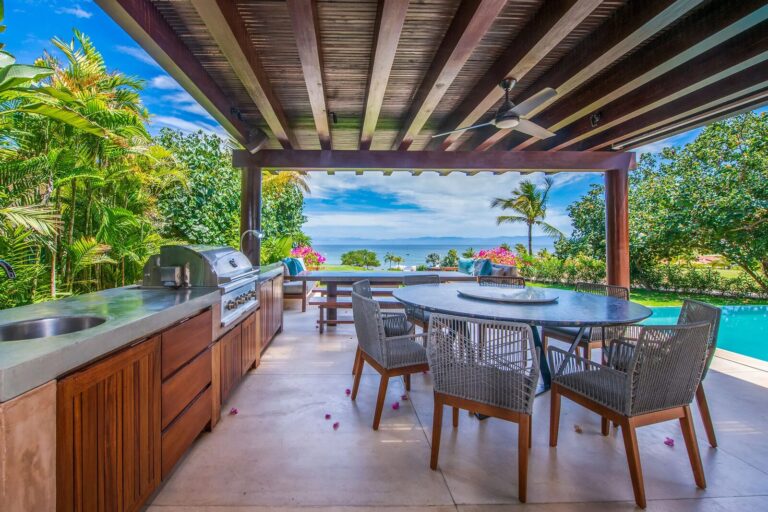
The best way to enjoy whale season is to wake up just minutes from the water. From a private villa in Punta Mita you can head out on an early boat, spend the afternoon by the pool and, on many days, spot whales spouting from your own terrace.
Whale season dates fill up fast. Explore our Punta Mita villas and reserve your winter escape today.